🪴 Compostable packaging: what brands need to know


Compostable packaging is a good fit when your product is used where food scraps are collected, such as cafés, stadiums, offices and food service, and when it's certified to a recognized standard like ASTM D6400. Outside those settings it usually ends up in landfill or contaminating recycling. In California, the word "compostable" on pack is now regulated, so brands need proof before they print it.
This guide covers how composting actually works, where compostable packaging succeeds and fails, and what the new labeling laws mean for your packaging decisions.
What is compostable packaging?
Compostable packaging is designed to break down into water, carbon dioxide and organic matter under composting conditions. There are two main types:
- Industrially compostable packaging needs a commercial facility, with high heat and controlled moisture, to break down. It should go in a food scraps bin only where the local program accepts it.
- Home compostable packaging can break down in a backyard pile at lower temperatures. It's less common and harder to certify.
A quick note on "biodegradable": it isn't the same as compostable. Almost anything biodegrades eventually, so the term tells people very little. Several US states now restrict it on packaging, and it's one of the claims that trips brands up most often. Our guide to avoiding confusing recycling claims covers the wider rules.
How does industrial composting work?
Here's what happens to compostable packaging after a food scraps bin is collected:
- The town or a private hauler collects the material and brings it to a composting facility.
- Staff and machines pull out anything that isn't compostable, like plastic bags and general trash.
- Nitrogen-rich "greens" (food scraps, garden waste) are mixed with carbon-rich "browns" (leaves, branches, paper) to balance the pile.
- The mix is managed in one of three ways. Windrows are long rows about 4–8 feet high that get turned regularly. Aerated static piles work the same way, but air is pushed through instead. In-vessel systems use a closed drum or silo with tight control over temperature and airflow.
- After three to six months (a few weeks for in-vessel), the result is finished compost, sold to farms, gardeners and landscapers.

The catch for brands: windrows and static piles often can't take meat, dairy or compostable plastics, because those need higher temperatures or attract pests. Many facilities reject compostable packaging outright because staff can't tell it apart from regular plastic on the sorting line. If the facilities your customers use won't accept it, your compostable cup gets pulled out and landfilled.
How is home composting different?
Home composting is simpler but less forgiving. A backyard pile or bin runs cooler than a commercial facility, usually 120–160°F at its best, and only when it's managed well. That's why most industrially compostable packaging won't break down at home.

Home composters balance "greens" (fruit and veg scraps, coffee grounds, tea bags) with "browns" (dry leaves, cardboard, newspaper) at roughly 20–30 parts carbon to 1 part nitrogen. Fats, oils, meat and industrially compostable packaging should stay out. Unless your packaging is certified home compostable, don't tell customers to put it in a backyard bin.
What do the new labeling laws mean for brands?
The rules on what you can print have tightened. If you sell in California, two laws matter most:
- AB 1201 (compostable claims). To use the word "compostable" in California, a product must be certified to ASTM D6400 or D6868 (or OK compost HOME for "home compostable"), contain under 100 ppm total organic fluorine, and be easy to tell apart from non-compostable products. From June 30, 2027, it must also be an allowable input under the USDA National Organic Program, according to CalRecycle's labeling guidance.
- SB 343 (recyclable claims). The chasing arrows or any "recyclable" claim can only appear if the material is actually collected and sorted for recycling across most of California. Compliance applies to products manufactured from October 4, 2026, although a federal court has paused parts of its enforcement.
Other states are following. Washington and Colorado require certified compostable products to show a third-party certification logo and be visually distinct, often with green, brown or beige labeling. Minnesota requires compostable claims to be certified by a qualifying body from January 1, 2026.
What this means in practice: "compostable" is now a regulated claim, not a marketing word. Before you print it, check your certification, your colors and where your product is actually sold. If you're already reporting packaging data for EPR, the same records will back up your labeling.
What happens when compostables end up in the wrong bin?
This is the part most packaging decisions miss. A compostable cup only works if the customer puts it in the right bin, and most people don't know which bin that is.
Compostable plastics often look like regular plastic. In recycling, they're a contaminant that can lower the value of a bale. In general trash, they go to landfill. Contamination is already a big problem: around 25% of what goes in US recycling bins doesn't belong there, according to our Road to Zero-Waste 2024 report.
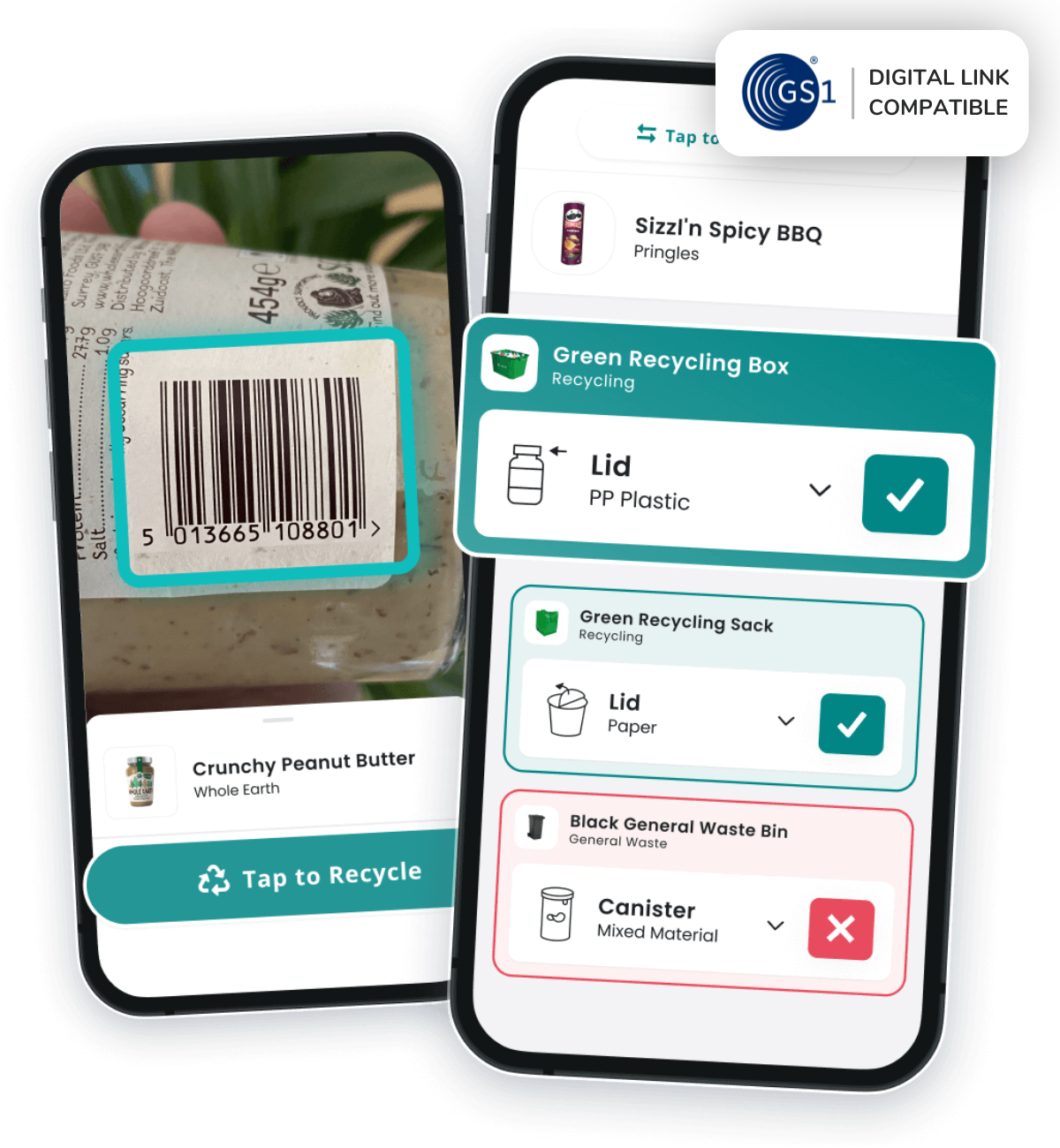
The fix is clear, local disposal guidance at the moment of disposal. That's what Scrapp® does for brands: shoppers scan or search your product in the free Scrapp app and see exactly where each part of the packaging goes, based on their local rules. Your coffee cup or food container stops being a guess.
Is compostable packaging right for your brand?
Use this as a quick check.
Compostable packaging tends to work when:
- The product is used in a closed setting with food scraps collection, like stadiums, campuses, offices and quick-service restaurants.
- The packaging is likely to be contaminated with food, so it can't be recycled anyway.
- You can get it certified, and the facilities serving your customers accept it.
- You can put clear disposal instructions on pack and in the places customers check.
It tends to struggle when:
- Your product is sold nationally into areas with no food scraps collection.
- A recyclable format (like aluminum, PET or uncoated paper) would do the same job and is widely collected.
- Shelf life matters. Some compostable materials start to degrade in storage, and many are less strong or flexible than conventional plastics.
- The cost difference can't be absorbed. Compostable materials are often more expensive to produce.
- An "earthy" look doesn't fit your brand.
On the plus side, compostable materials are usually made from renewable sources like plant starch and cellulose, and when they're composted they become a useful soil additive instead of waste.
Frequently asked questions
Can compostable packaging go in the recycling bin?
No. Compostable plastics contaminate recycling because they can't be processed with conventional plastics. They should go in a food scraps or organics bin where the local program accepts them, or in general trash if it doesn't.
Is biodegradable the same as compostable?
No. "Compostable" means the product meets a specific standard and breaks down within a set time in composting conditions. "Biodegradable" has no set timeframe or standard, and several states, including California, restrict its use on packaging.
What certification do I need to label packaging compostable in California?
Certification to ASTM D6400 (plastics) or D6868 (coated paper), or OK compost HOME for "home compostable". You also need to meet the fluorine limit and labeling rules, and from June 30, 2027, the USDA organic input requirement.
How do I tell customers how to dispose of compostable packaging?
Put clear instructions on pack, then back them up with local guidance. Disposal rules change by town, so a single on-pack message can't cover everyone. A tool like Scrapp gives each customer the right answer for where they live.
Make your packaging easy to dispose of correctly
Compostable packaging only delivers on its promise when it reaches the right facility. Scrapp's free program for brands and retailers puts accurate, local disposal guidance in front of every customer who scans or searches your products, and organizes your packaging data for EPR reporting at the same time.
Book a 15-minute call with our team to see how your products would show up in the app.